
Active Resistin (RETN)
ADSF; FIZZ3; RETN1; RSTN; XCP1; Adipose tissue-specific secretory factor; C/EBP-epsilon-regulated myeloid-specific secreted cysteine-rich protein; Cysteine-rich secreted FIZZ3
- Product No.UAPA847Hu62
- Organism SpeciesHomo sapiens (Human) Same name, Different species.
- Buffer FormulationPBS, pH7.4, containing 0.01% SKL, 5% Trehalose.
- TraitsFreeze-dried powder
- Purity> 90%
- Isoelectric Point5.8
- ApplicationsCell culture; Activity Assays.
- Download n/a
- UOM 10µg50µg 200µg 1mg 5mg
-
FOB
US$
For more details, please contact local distributors!US$
For more details, please contact local distributors! US$
For more details, please contact local distributors! US$
For more details, please contact local distributors! US$
For more details, please contact local distributors!
-
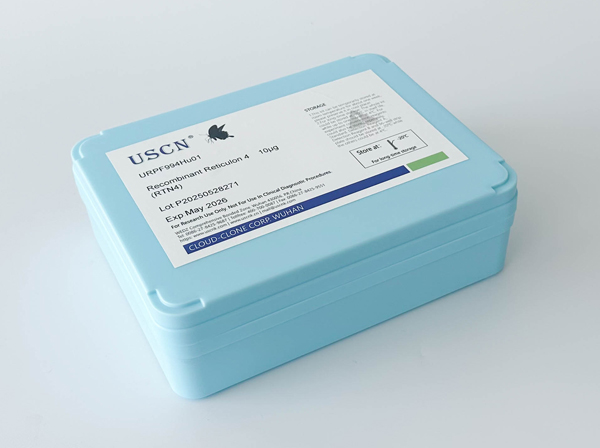 Packages (Simulation)
-
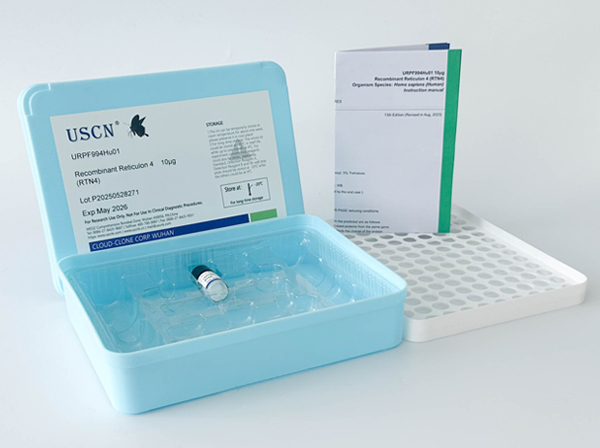 Packages (Simulation)
-
 SDS-PAGE
-
ISO9001: 2008, ISO13485: 2003 Registered
ACTIVITY TEST of the Active Resistin (RETN)
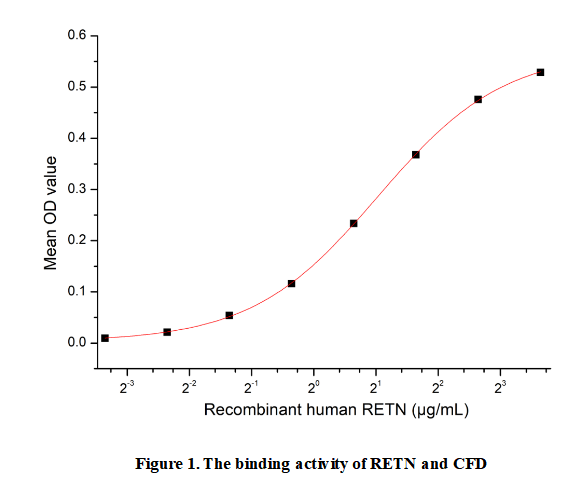
Resistin (RETN), named for its association with insulin resistance, is a cysteine-rich adipokine primarily secreted by immune cells like macrophages in humans, as well as by adipocytes in rodents. It plays a key role in promoting insulin resistance, inflammation, and endothelial dysfunction. Resistin is implicated in the pathogenesis of type 2 diabetes, obesity, and atherosclerosis by interfering with insulin signaling pathways and increasing the production of pro-inflammatory cytokines. Its circulating levels are often elevated in metabolic disorders, making it a potential biomarker and therapeutic target for these conditions. The mechanisms of action involve interactions with various receptors, such as Toll-like Receptor 4 (TLR4) and Adenylyl Cyclase-Associated Protein 1 (CAP1), leading to the activation of inflammatory signaling cascades.Besides,CFD has been identified as an interactor of RETN, thus a functional binding ELISA assay was conducted to detect the interaction of recombinant human RETN and recombinant human CFD . Briefly, biotin-linked RETN were diluted serially in PBS, with 0.01% BSA (pH 7.4). Duplicate samples of 100µl were then transferred to CFD-coated microtiter wells and incubated for 1h at 37℃. Wells were washed with PBST 3 times and incubation with Streptavidin-HRP for 30min, then wells were aspirated and washed 5 times. With the addition of substrate solution, wells were incubated 15-25 minutes at 37℃. Finally, add 50µl stop solution to the wells and read at 450nm immediately. The binding activity of RETN and CFD was shown in Figure 1, the EC50 for this effect is 2.04126µg/mL.
USAGE of the Active Resistin (RETN)
Reconstitute in 10mM PBS (pH7.4) to a concentration of 0.1-1.0 mg/mL. Do not vortex.
STORAGE of the Active Resistin (RETN)
Avoid repeated freeze/thaw cycles. Store at 2-8°C for one month. Aliquot and store at -80°C for 12 months.
STABILITY of the Active Resistin (RETN)
The thermal stability is described by the loss rate. The loss rate was determined by accelerated thermal degradation test, that is, incubate the protein at 37°C for 48h, and no obvious degradation and precipitation were observed. The loss rate is less than 5% within the expiration date under appropriate storage condition.
INCREMENT SERVICES
BCA Protein Quantification Kit
Molecular Mass Marker for Protein
Monoclonal Antibody Customized Service
Polyclonal Antibody Customized Service
Protein Activity Test Experiment Service
Electrophoretic Mobility Shift Assay (EMSA) Experiment Service
Buffer
Lentivirus Packaging Experiment Service
Adenovirus Packaging Experiment Service
Real Time PCR Experimental Service
Spike RBD Protein (S-RBD)
Protein G
Protein A