
Polyclonal Antibody to Virus Induced Signaling Adapter (VISA)
CARDIF; IPS1; MAVS; Mitochondrial Antiviral-Signaling Protein; Interferon beta promoter stimulator protein 1; CARD Adaptor Inducing IFN-beta; NF-kappa-B-activating protein 031N
- Product No.UPAC597Hu01
- Organism SpeciesHomo sapiens (Human) Same name, Different species.
- SourcePolyclonal antibody preparation
- HostRabbit
- Potencyn/a
- Ig Type IgG
- PurificationAntigen-specific affinity chromatography followed by Protein A affinity chromatography
- LabelNone
- Immunogen n/a
- Buffer FormulationPBS, pH7.4, containing 0.01% SKL, 1mM DTT, 5% Trehalose and Proclin300.
- TraitsLiquid
- Concentration500µg/mL
- Organism Species Moren/a
- ApplicationsWB,ICC/IF
If the antibody is used in flow cytometry, please check FCM antibodies. - Download n/a
- UOM 20µl100µl 200µl 1ml 10ml
-
FOB
US$ 53
For more details, please contact local distributors!US$ 123
For more details, please contact local distributors! US$ 175
For more details, please contact local distributors! US$ 438
For more details, please contact local distributors! US$ 1750
For more details, please contact local distributors!
-
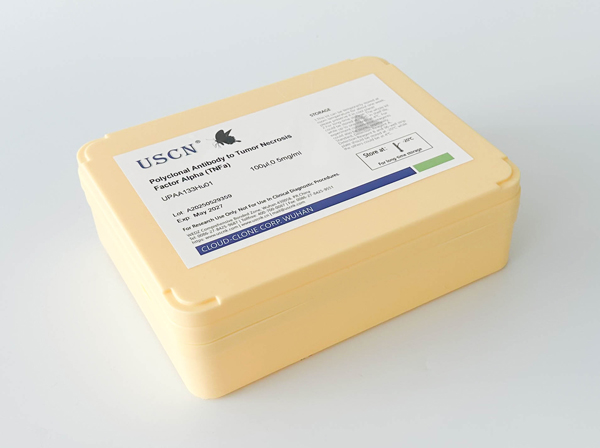 Packages (Simulation)
-
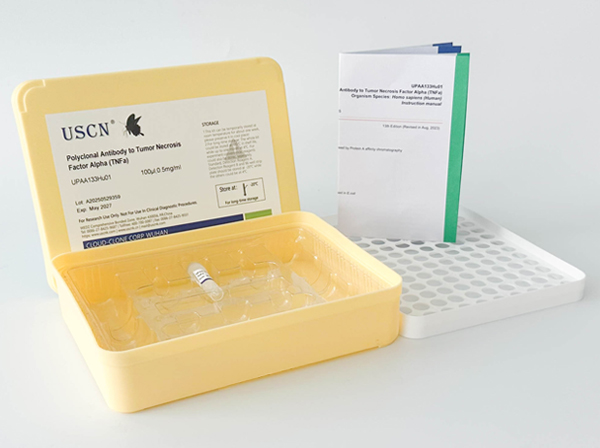 Packages (Simulation)
-
 AF488 staining on IF;
Sample: Hela cell
Primary Ab: 20µg/ml Rabbit Anti-Human VISA Antibody
Second Ab: 2µg/ml AF488-Linked Caprine Anti-Rabbit IgG Polyclonal Antibody
(Catalog: SAA544Rb11)
-
Western Blot; Samples: Lane1: A431 cell lysate; Lane2: MCF7 cell lysate;
Primary Ab: 0.1µg/ml Rabbit Anti-Human VISA Antibody
Second Ab: 0.2µg/ml HRP-Linked Caprine Anti-Rabbit IgG Polyclonal Antibody
(Catalog: SAA544Rb19)
-
ISO9001: 2008, ISO13485: 2003 Registered
SPECIFITY of the Polyclonal Antibody to Virus Induced Signaling Adapter (VISA)
The antibody is a rabbit polyclonal antibody raised against VISA. It has been selected for its ability to recognize VISA in immunohistochemical staining and western blotting.
USAGE of the Polyclonal Antibody to Virus Induced Signaling Adapter (VISA)
Western blotting: 0.1-2µg/mL;
Immunohistochemistry: 5-20µg/mL;
Immunocytochemistry: 5-20µg/mL;
Optimal working dilutions must be determined by end user.
STORAGE of the of the Polyclonal Antibody to Virus Induced Signaling Adapter (VISA)
Store at 4°C for frequent use. Stored at -20°C in a manual defrost freezer for two year without detectable loss of activity. Avoid repeated freeze-thaw cycles.
STABILITY of the Polyclonal Antibody to Virus Induced Signaling Adapter (VISA)
The thermal stability is described by the loss rate. The loss rate was determined by accelerated thermal degradation test, that is, incubate the protein at 37°C for 48h, and no obvious degradation and precipitation were observed. The loss rate is less than 5% within the expiration date under appropriate storage condition.
GIVEAWAYS
INCREMENT SERVICES
Antibody Labeling Customized Service
Protein A/G Purification Column
Staining Solution for Cells and Tissue
Positive Control for Antibody
Tissue/Sections Customized Service
Phosphorylated Antibody Customized Service
Western Blot (WB) Experiment Service
Immunohistochemistry (IHC) Experiment Service
Immunocytochemistry (ICC) Experiment Service
Flow Cytometry (FCM) Experiment Service
Immunoprecipitation (IP) Experiment Service
Immunofluorescence (IF) Experiment Service
Buffer
DAB Chromogen Kit
SABC Kit
Long-arm Biotin Labeling Kit
Real Time PCR Experimental Service