
ELISA Kit for Endogenous Retroviral Family W, Env Member 1 (ERVWE1)
Env-W; HERV-7q; HERV-W; HERV-W-ENV; HERVW; Envelope Protein; HERV-W Env Glycoprotein; Enverin; Syncytin-1; HERV-Tryptophan Envelope Protein; Envelope Glycoprotein
- Product No.USEL471Hu
- Organism SpeciesHomo sapiens (Human) Same name, Different species.
- Test MethodDouble-antibody Sandwich
- Assay Length3h
- Detection Range0.156-10ng/mL
- SensitivityThe minimum detectable dose of this kit is typically less than 0.055ng/mL.
- Sample Typetissue homogenates, cell lysates and other biological fluids
- Download Instruction Manual
- UOM 48T96T 96T*5 96T*10 96T*100
-
FOB
US$ 270
For more details, please contact local distributors!US$ 385
For more details, please contact local distributors! US$ 1733
For more details, please contact local distributors! US$ 3273
For more details, please contact local distributors! US$ 26950
For more details, please contact local distributors!
-
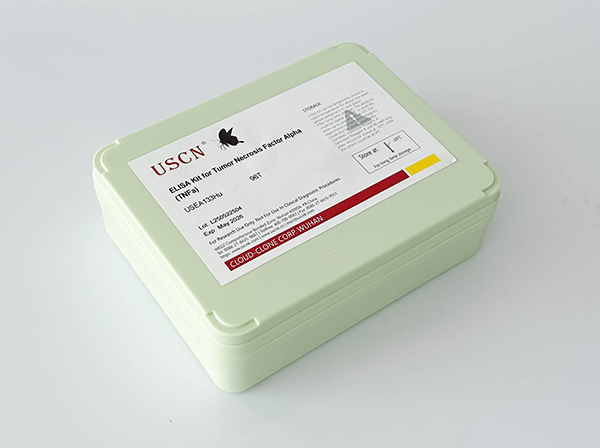 Packages (Simulation)
-
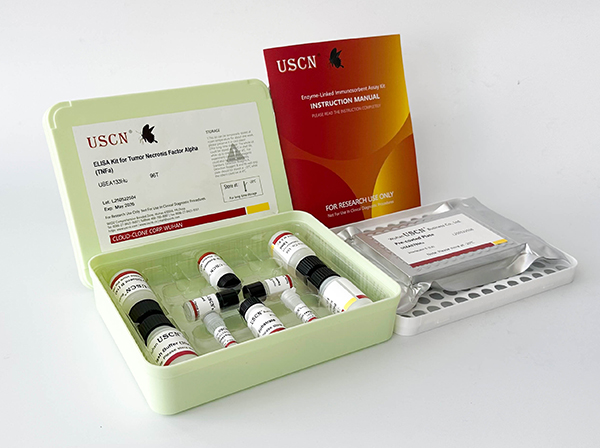 Packages (Simulation)
-
 Results demonstration
-
Typical Standard Curve
-
ISO9001: 2008, ISO13485: 2003 Registered
Specificity of the ELISA Kit for Endogenous Retroviral Family W, Env Member 1 (ERVWE1)
This assay has high sensitivity and excellent specificity for detection of Endogenous Retroviral Family W, Env Member 1 (ERVWE1).
No significant cross-reactivity or interference between Endogenous Retroviral Family W, Env Member 1 (ERVWE1) and analogues was observed.
Precision of the ELISA Kit for Endogenous Retroviral Family W, Env Member 1 (ERVWE1)
Intra-assay Precision (Precision within an assay): 3 samples with low, middle and high level Endogenous Retroviral Family W, Env Member 1 (ERVWE1) were tested 20 times on one plate, respectively.
Inter-assay Precision (Precision between assays): 3 samples with low, middle and high level Endogenous Retroviral Family W, Env Member 1 (ERVWE1) were tested on 3 different plates, 8 replicates in each plate.
CV(%) = SD/meanX100
Intra-Assay: CV<10%
Inter-Assay: CV<12%
Stability of the ELISA Kit for Endogenous Retroviral Family W, Env Member 1 (ERVWE1)
The stability of kit is determined by the loss rate of activity. The loss rate of this kit is less than 5% within the expiration date under appropriate storage condition.
To minimize extra influence on the performance, operation procedures and lab conditions, especially room temperature, air humidity, incubator temperature should be strictly controlled. It is also strongly suggested that the whole assay is performed by the same operator from the beginning to the end.
Assay procedure summary of the ELISA Kit for Endogenous Retroviral Family W, Env Member 1 (ERVWE1)
1. Prepare all reagents, samples and standards;
2. Add 100µL standard or sample to each well. Incubate 1 hours at 37°C;
3. Aspirate and add 100µL prepared Detection Reagent A. Incubate 1 hour at 37°C;
4. Aspirate and wash 3 times;
5. Add 100µL prepared Detection Reagent B. Incubate 30 minutes at 37°C;
6. Aspirate and wash 5 times;
7. Add 90µL Substrate Solution. Incubate 10-20 minutes at 37°C;
8. Add 50µL Stop Solution. Read at 450nm immediately.
Test principle of the ELISA Kit for Endogenous Retroviral Family W, Env Member 1 (ERVWE1)
The test principle applied in this kit is Sandwich enzyme immunoassay. The microtiter plate provided in this kit has been pre-coated with an antibody specific to Endogenous Retroviral Family W, Env Member 1 (ERVWE1). Standards or samples are then added to the appropriate microtiter plate wells with a biotin-conjugated antibody specific to Endogenous Retroviral Family W, Env Member 1 (ERVWE1). Next, Avidin conjugated to Horseradish Peroxidase (HRP) is added to each microplate well and incubated. After TMB substrate solution is added, only those wells that contain Endogenous Retroviral Family W, Env Member 1 (ERVWE1), biotin-conjugated antibody and enzyme-conjugated Avidin will exhibit a change in color. The enzyme-substrate reaction is terminated by the addition of sulphuric acid solution and the color change is measured spectrophotometrically at a wavelength of 450nm ± 10nm. The concentration of Endogenous Retroviral Family W, Env Member 1 (ERVWE1) in the samples is then determined by comparing the O.D. of the samples to the standard curve.
GIVEAWAYS
INCREMENT SERVICES
Single-component Reagents of Assay Kit
Lysis Buffer Specific for ELISA / CLIA
Quality Control of Kit
ELISA Kit Customized Service
Disease Model Customized Service
Serums Customized Service
TGFB1 Activation Reagent
Real Time PCR Experimental Service
Streptavidin
Fast blue Protein Stain solution
Single-component Reagents of FLIA Kit
Streptavidin-Agarose Beads
Related products
| Catalog No. | Organism species: Homo sapiens (Human) | Applications (RESEARCH USE ONLY!) |
| URPL471Hu01 | Recombinant Endogenous Retroviral Family W, Env Member 1 (ERVWE1) | Positive Control; Immunogen; SDS-PAGE; WB. |
| USEL471Hu | ELISA Kit for Endogenous Retroviral Family W, Env Member 1 (ERVWE1) | Enzyme-linked immunosorbent assay for Antigen Detection. |