
Active Macrophage Migration Inhibitory Factor (MIF)
GIF; GLIF; MMIF; Glycosylation-Inhibiting Factor; L-dopachrome isomerase; L-dopachrome tautomerase; Phenylpyruvate tautomerase
- Product No.UAPA698Hu61
- Organism SpeciesHomo sapiens (Human) Same name, Different species.
- Buffer FormulationPBS, pH7.4, containing 5% Trehalose.
- TraitsFreeze-dried powder
- Purity> 90%
- Isoelectric Point6.6
- ApplicationsCell culture; Activity Assays.
- Download n/a
- UOM 10µg50µg 200µg 1mg 5mg
-
FOB
US$ 100
For more details, please contact local distributors!US$ 250
For more details, please contact local distributors! US$ 500
For more details, please contact local distributors! US$ 1500
For more details, please contact local distributors! US$ 3750
For more details, please contact local distributors!
-
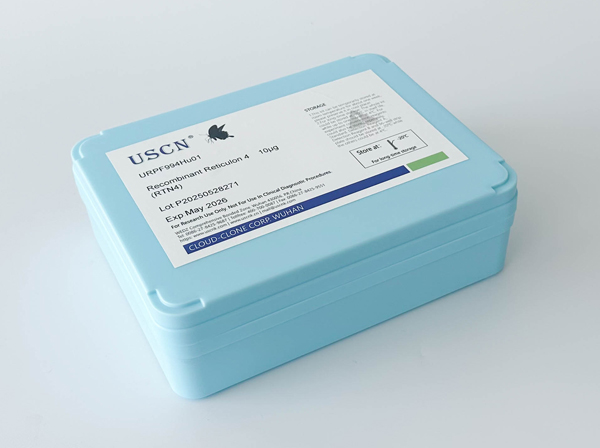 Packages (Simulation)
-
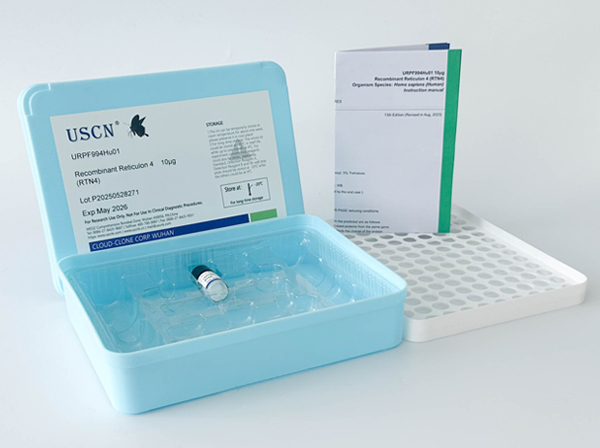 Packages (Simulation)
-
 Figure. SDS-PAGE
-
ISO9001: 2008, ISO13485: 2003 Registered
ACTIVITY TEST of the Active Macrophage Migration Inhibitory Factor (MIF)
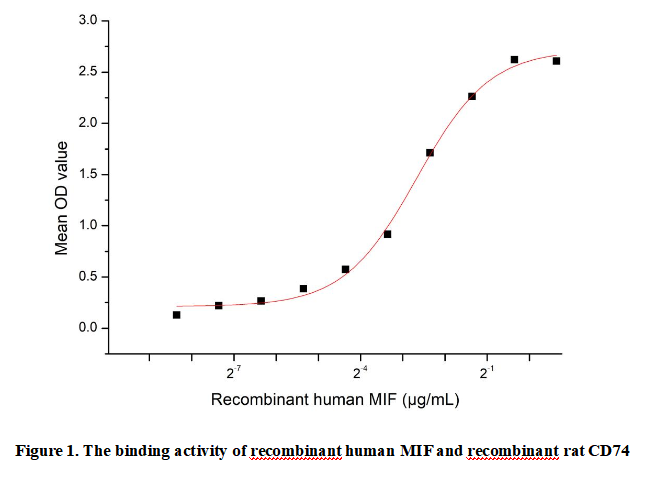
Macrophage Migration Inhibitory Factor (MIF) is a pleiotropic cytokine that participates in both innate and adaptive immune responses. It is constitutively expressed in various cell types and rapidly released upon exposure to inflammatory stimuli, playing a pivotal role in regulating macrophage functions—including phagocytosis, cytokine production, and immune activation. Beyond immune regulation, MIF is also involved in modulating cell proliferation, apoptosis, and autophagy. Clinically, it has been implicated in the pathogenesis of multiple diseases, such as sepsis, autoimmune disorders, and various malignancies. Mechanistically, MIF binds to Cluster Of Differentiation 74 (CD74)—the invariant chain of major histocompatibility complex (MHC) class II complexes—with high affinity. As MIF’s primary high-affinity receptor, CD74 mediates the initiation of pro-inflammatory signaling pathways downstream of MIF binding.To detect the activity of recombinant MIF, a functional ELISA assay was performed to evaluate the interaction between recombinant human MIF and recombinant rat CD74.Briefly, biotin-linked MIF were diluted serially in PBS, with 0.01% BSA (pH 7.4). Duplicate samples of 100µl were then transferred to CD74-coated microtiter wells and incubated for 1h at 37℃. Wells were washed with PBST 3 times and incubation with Streptavidin-HRP for 30min, then wells were aspirated and washed 5 times. With the addition of substrate solution, wells were incubated 15-25 minutes at 37℃. Finally, add 50µl stop solution to the wells and read at 450nm immediately. The binding activity of MIF and CD74 was shown in Figure 1, the EC50 for this effect is 0.16 µg/mL.
USAGE of the Active Macrophage Migration Inhibitory Factor (MIF)
Reconstitute in 10mM PBS (pH7.4) to a concentration of 0.1-1.0 mg/mL. Do not vortex.
STORAGE of the Active Macrophage Migration Inhibitory Factor (MIF)
Avoid repeated freeze/thaw cycles. Store at 2-8°C for one month. Aliquot and store at -80°C for 12 months.
STABILITY of the Active Macrophage Migration Inhibitory Factor (MIF)
The thermal stability is described by the loss rate. The loss rate was determined by accelerated thermal degradation test, that is, incubate the protein at 37°C for 48h, and no obvious degradation and precipitation were observed. The loss rate is less than 5% within the expiration date under appropriate storage condition.
INCREMENT SERVICES
BCA Protein Quantification Kit
Molecular Mass Marker for Protein
Monoclonal Antibody Customized Service
Polyclonal Antibody Customized Service
Protein Activity Test Experiment Service
Electrophoretic Mobility Shift Assay (EMSA) Experiment Service
Buffer
Lentivirus Packaging Experiment Service
Adenovirus Packaging Experiment Service
Real Time PCR Experimental Service
Spike RBD Protein (S-RBD)
Protein G
Protein A