
Active Lactoferrin (LTF)
HLF2; LF; GIG12; Lactotransferrin; Growth-inhibiting protein 12; Talalactoferrin; Lfcin-H; Kaliocin-1
- Product No.UAPA780Bo02
- Organism SpeciesBos taurus; Bovine (Cattle) Same name, Different species.
- Buffer FormulationPBS, pH7.4, containing 0.01% SKL, 5% Trehalose.
- TraitsFreeze-dried powder
- Purity> 90%
- Isoelectric Point9.2
- ApplicationsCell culture; Activity Assays.
- Download n/a
- UOM 10µg50µg 200µg 1mg 5mg
-
FOB
US$
For more details, please contact local distributors!US$
For more details, please contact local distributors! US$
For more details, please contact local distributors! US$
For more details, please contact local distributors! US$
For more details, please contact local distributors!
-
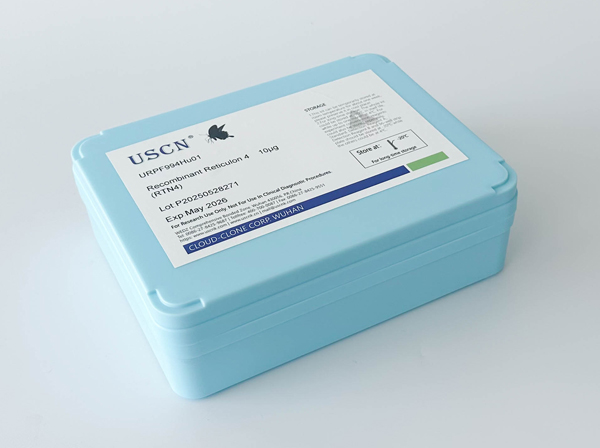 Packages (Simulation)
-
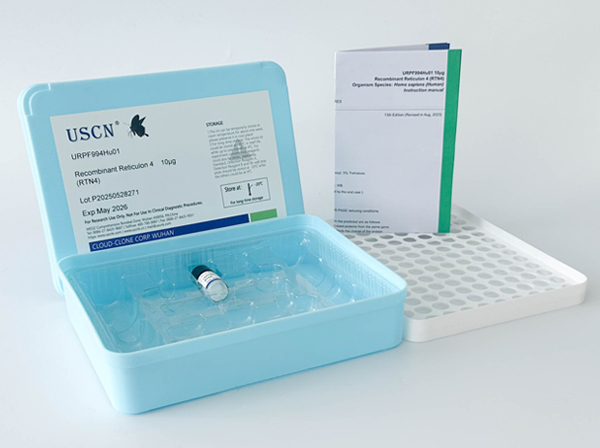 Packages (Simulation)
-
 ISO9001: 2008, ISO13485: 2003 Registered
ACTIVITY TEST of the Active Lactoferrin (LTF)
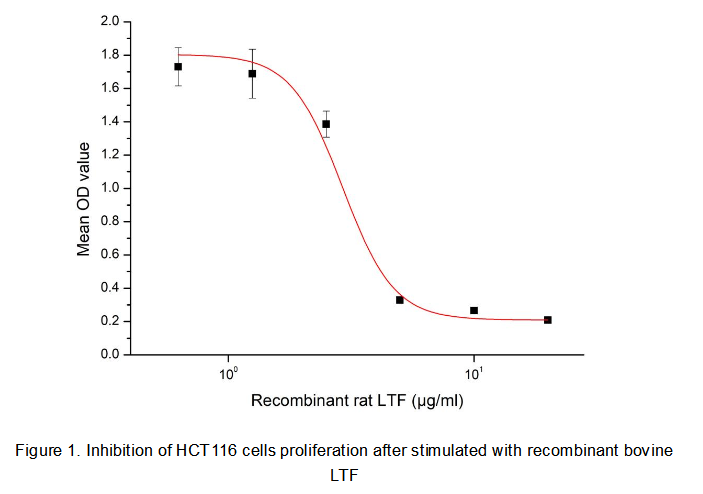
Lactoferrin (LTF), a member of the transferrin family of iron-binding glycoproteins, is a multifunctional protein predominantly secreted by exocrine glands and immune cells. It exerts potent iron-sequestering activity to deprive pathogens of essential iron, mediating broad-spectrum antimicrobial effects. Beyond innate immunity, LTF exhibits robust antiproliferative and proapoptotic properties in malignant cells: it modulates cell cycle checkpoints to arrest proliferation and activates caspase-dependent apoptotic signaling pathways, inducing programmed cell death in cancer cells. Additionally, LTF regulates immune responses and anti-inflammatory processes, making it a promising candidate for anticancer and antimicrobial therapeutic development. To test the effect of LTF on cell apoptosis, HCT116 cells were seeded into triplicate wells of 96-well plates at a density of 4,000 cells/well and allowed to attach overnight, then the medium was replaced with various concentrations of recombinant bovine LTF diluted with 5% serum standard DMEM. After incubated for 72h, cells were observed by inverted microscope and cell proliferation was measured by Cell Counting Kit-8 (CCK-8). Briefly, 10 µl of CCK-8 solution was added to each well of the plate, then the absorbance at 450 nm was measured using a microplate reader after incubating the plate for 1-4 hours at 37 ℃. Cell viability was assessed by CCK-8 (Cell Counting Kit-8 ) assay after incubation with recombinant bovine LTF for 72h. The result was shown in Figure 1. It was obvious that LTF significantly decreased cell viability of HCT116 cells. The ED50 of recombinant bovine LTF is 2.91 μg/ml.
USAGE of the Active Lactoferrin (LTF)
Reconstitute in 10mM PBS (pH7.4) to a concentration of 0.1-1.0 mg/mL. Do not vortex.
STORAGE of the Active Lactoferrin (LTF)
Avoid repeated freeze/thaw cycles. Store at 2-8°C for one month. Aliquot and store at -80°C for 12 months.
STABILITY of the Active Lactoferrin (LTF)
The thermal stability is described by the loss rate. The loss rate was determined by accelerated thermal degradation test, that is, incubate the protein at 37°C for 48h, and no obvious degradation and precipitation were observed. The loss rate is less than 5% within the expiration date under appropriate storage condition.
INCREMENT SERVICES
BCA Protein Quantification Kit
Molecular Mass Marker for Protein
Monoclonal Antibody Customized Service
Polyclonal Antibody Customized Service
Protein Activity Test Experiment Service
Electrophoretic Mobility Shift Assay (EMSA) Experiment Service
Buffer
Lentivirus Packaging Experiment Service
Adenovirus Packaging Experiment Service
Real Time PCR Experimental Service
Spike RBD Protein (S-RBD)
Protein G
Protein A
Related products
| Catalog No. | Organism species: Bos taurus; Bovine (Cattle) | Applications (RESEARCH USE ONLY!) |
| UNPA780Bo01 | Native Lactoferrin (LTF) | Positive Control; Immunogen; SDS-PAGE; WB. |
| URPA780Bo01 | Recombinant Lactoferrin (LTF) | Positive Control; Immunogen; SDS-PAGE; WB. |
| UAPA780Bo02 | Active Lactoferrin (LTF) | Cell culture; Activity Assays. |
| UAPA780Bo01 | Active Lactoferrin (LTF) | Cell culture; Activity Assays. |
| UPAA780Bo05 | Polyclonal Antibody to Lactoferrin (LTF) | WB |
| UPAA780Bo01 | Polyclonal Antibody to Lactoferrin (LTF) | WB,ICC/IF |
| UMAA780Bo21 | Monoclonal Antibody to Lactoferrin (LTF) | WB; IHC; ICC; IP. |
| USEA780Bo | ELISA Kit for Lactoferrin (LTF) | Enzyme-linked immunosorbent assay for Antigen Detection. |
| USCA780Bo | CLIA Kit for Lactoferrin (LTF) | Chemiluminescent immunoassay for Antigen Detection. |
| ULMA780Bo | Multiplex Assay Kit for Lactoferrin (LTF) ,etc. by FLIA (Flow Luminescence Immunoassay) | FLIA Kit for Antigen Detection. |
| UKSA780Bo01 | ELISA Kit DIY Materials for Lactoferrin (LTF) | Main materials for "Do It (ELISA Kit) Yourself". |