
Active Filaggrin (FLG)
Profilaggrin
- Product No.UAPJ103Hu61
- Organism SpeciesHomo sapiens (Human) Same name, Different species.
- Buffer FormulationPBS, pH7.4, containing 0.01% SKL, 1mM DTT, 5% Trehalose and Proclin300.
- TraitsFreeze-dried powder
- Purity> 80%
- Isoelectric Point11.1
- ApplicationsCell culture; Activity Assays.
- Download n/a
- UOM 10µg50µg 200µg 1mg 5mg
-
FOB
US$
For more details, please contact local distributors!US$
For more details, please contact local distributors! US$
For more details, please contact local distributors! US$
For more details, please contact local distributors! US$
For more details, please contact local distributors!
-
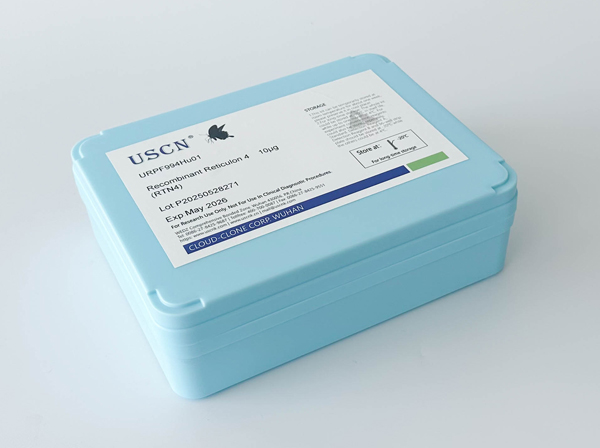 Packages (Simulation)
-
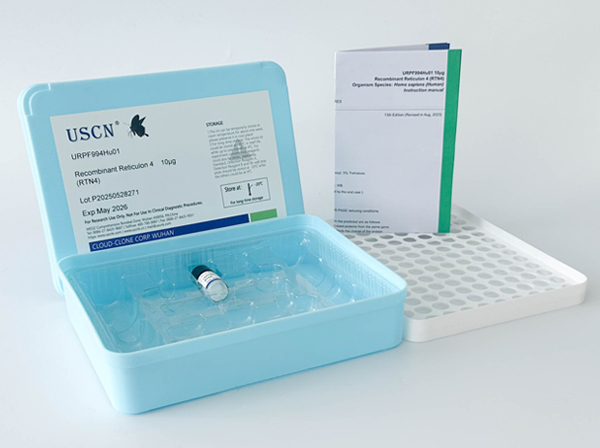 Packages (Simulation)
-
 SDS-PAGE
-
ISO9001: 2008, ISO13485: 2003 Registered
ACTIVITY TEST of the Active Filaggrin (FLG)
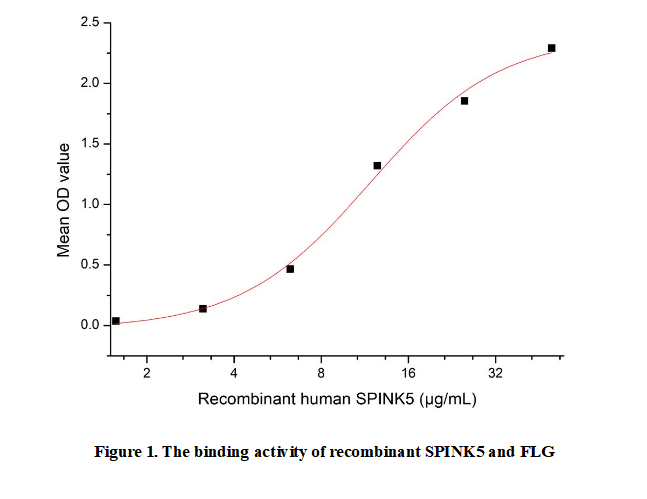
Filaggrin (FLG), a key keratinocyte differentiation protein encoded by the FLG gene, is critical for skin barrier formation. Synthesized as a large precursor, profilaggrin, it is cleaved into functional filaggrin monomers in the stratum granulosum of the epidermis. These monomers bind to keratin filaments, promoting their aggregation to form a dense, protective cytoskeletal structure. Filaggrin also contributes to skin hydration by breaking down into natural moisturizing factors. FLG interacts with SPINK5, which encodes the serine protease inhibitor LEKTI; SPINK5 regulates proteases that process profilaggrin into filaggrin, maintaining proper barrier function.Briefly, SPINK5 was diluted serially in PBS with 0.01% BSA (pH 7.4). Duplicate samples of 100 μl were then transferred to FLG-coated microtiter wells and incubated for 1h at 37℃. Wells were washed with PBST and incubated for 1h with anti-SPINK5 pAb, then aspirated and washed 3 times. After incubation with HRP labelled secondary antibody for 1h at 37℃, wells were aspirated and washed 5 times. With the addition of substrate solution, wells were incubated 15-25 minutes at 37℃. Finally, add 50 µL stop solution to the wells and read at 450/630nm immediately.Measured by its binding ability in a functional ELISA. When Recombinant FLG is lmmobilized at 2 µg/mL(100 uLwell), the concentration of SPINK5 that produces 50% optimal bindingresponse is found to be approximately11.830 µg/mL.
USAGE of the Active Filaggrin (FLG)
Reconstitute in 10mM PBS (pH7.4) to a concentration of 0.1-1.0 mg/mL. Do not vortex.
STORAGE of the Active Filaggrin (FLG)
Avoid repeated freeze/thaw cycles. Store at 2-8°C for one month. Aliquot and store at -80°C for 12 months.
STABILITY of the Active Filaggrin (FLG)
The thermal stability is described by the loss rate. The loss rate was determined by accelerated thermal degradation test, that is, incubate the protein at 37°C for 48h, and no obvious degradation and precipitation were observed. The loss rate is less than 5% within the expiration date under appropriate storage condition.
INCREMENT SERVICES
BCA Protein Quantification Kit
Molecular Mass Marker for Protein
Monoclonal Antibody Customized Service
Polyclonal Antibody Customized Service
Protein Activity Test Experiment Service
Electrophoretic Mobility Shift Assay (EMSA) Experiment Service
Buffer
Lentivirus Packaging Experiment Service
Adenovirus Packaging Experiment Service
Real Time PCR Experimental Service
Spike RBD Protein (S-RBD)
Protein G
Protein A
Related products
| Catalog No. | Organism species: Homo sapiens (Human) | Applications (RESEARCH USE ONLY!) |
| URPJ103Hu02 | Recombinant Filaggrin (FLG) | Positive Control; Immunogen; SDS-PAGE; WB. |
| URPJ103Hu01 | Recombinant Filaggrin (FLG) | Positive Control; Immunogen; SDS-PAGE; WB. |
| URPJ103Hu05 | Recombinant Filaggrin (FLG) | Positive Control; Immunogen; SDS-PAGE; WB. |
| UEPJ103Hu61 | Eukaryotic Filaggrin (FLG) | Positive Control; Immunogen; SDS-PAGE; WB. |
| URPJ103Hu03 | Recombinant Filaggrin (FLG) | Positive Control; Immunogen; SDS-PAGE; WB. |
| UAPJ103Hu61 | Active Filaggrin (FLG) | Cell culture; Activity Assays. |
| URPJ103Hu04 | Recombinant Filaggrin (FLG) | Positive Control; Immunogen; SDS-PAGE; WB. |
| UPAJ103Hu01 | Polyclonal Antibody to Filaggrin (FLG) | WB |
| UPAJ103Hu02 | Polyclonal Antibody to Filaggrin (FLG) | Testing in progress |
| ULAJ103Hu71 | Biotin-Linked Polyclonal Antibody to Filaggrin (FLG) | WB; IHC; ICC. |
| ULAJ103Hu83 | FITC-Linked Polyclonal Antibody to Filaggrin (FLG) | WB; IHC; ICC; IF. |
| ULAJ103Hu81 | FITC-Linked Polyclonal Antibody to Filaggrin (FLG) | WB; IHC; ICC; IF. |
| UMAJ103Hu21 | Monoclonal Antibody to Filaggrin (FLG) | Testing in progress |
| USEJ103Hu | ELISA Kit for Filaggrin (FLG) | Enzyme-linked immunosorbent assay for Antigen Detection. |
| USCJ103Hu | CLIA Kit for Filaggrin (FLG) | Chemiluminescent immunoassay for Antigen Detection. |
| ULMJ103Hu | Multiplex Assay Kit for Filaggrin (FLG) ,etc. by FLIA (Flow Luminescence Immunoassay) | FLIA Kit for Antigen Detection. |